MEMBER SPOTLIGHT
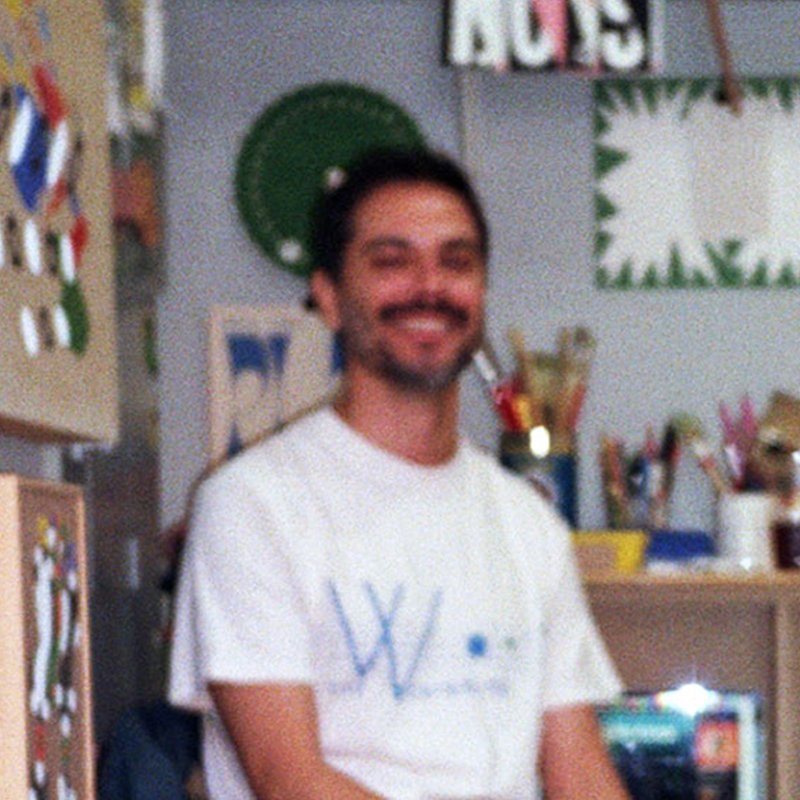
Josh Lambert
As an artist, designer, and musician, Josh Lambert pulls from his collective interests to create a beautifully fluid and dynamic visual language using bold forms, reacting in a variety of spaces.
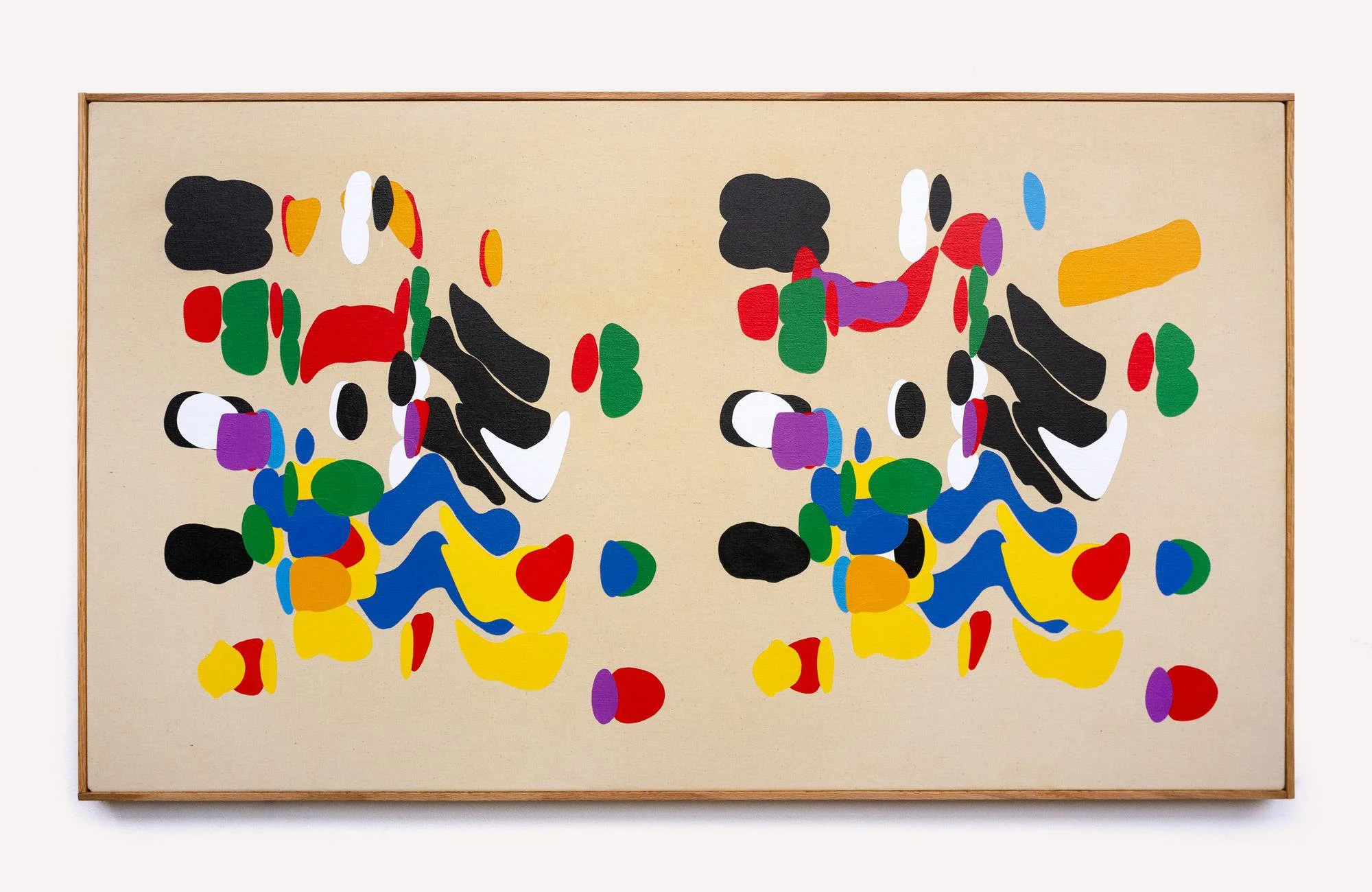
Untitled, 2023
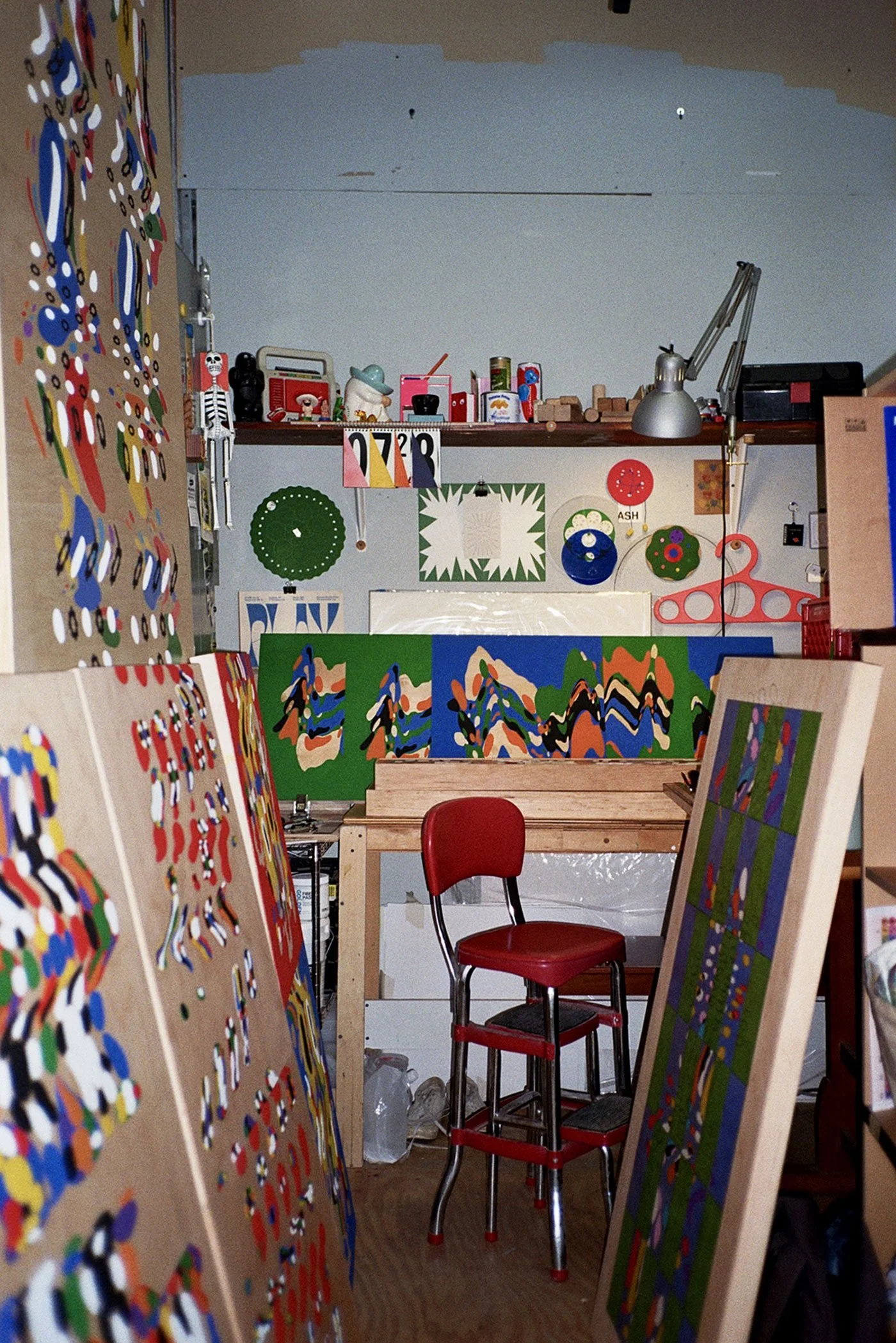
I know you to be an artist, but also a designer, and a drummer. I think we all have those separate but connected definitions that guide us to where we are. Can you share a little about your path and how that’s connected to or informed your practice?
I grew up with a musical and artistic grandfather, who had a lot of impact on me and my siblings. He suggested I drum at an early age and gave me my first pair of sticks. Also, my dad was always building and working on the house and cars. So, I’ve always been “artistic” and interested in creating. But specifically, drums was my intro to my fascination with rhythm.
For college, I went to Kansas City Art Institute and ended up going into Graphic Design. I’m a really analytical person, and learning about graphic design clicked for me. I love visual communication and creating something to be functional and useful. The process of designing is solution-based, and unlike creating art, it’s not so much focused on personal expression. This really resonated with me at the time. Basically, while in school for design and my early career as a designer, I had no interest in being an artist. I was interested in building visual systems and being in service to the problem at hand. I think a designer and drummer are similar in that way — both being able to adapt to the task and provide what is best needed.
After being a professional designer for a handful of years, I found myself craving to make things that aren’t so much a solution to a problem. To make without having a purpose. To simply create and experiment. Also, I was looking to get off the computer and use my hands more. Thinking about this time, I also got into meditation, and I'm wondering if I was more mindful of how I wanted to be in my body and get into a flow state.
Eventually, I decided to go down the freelance route so I could have my own schedule and make more time for art. Which for the past handful of years, has been more and more of my priority.
As I’ve been making art and witnessing my practice, I’ve noticed both drumming and designing have shaped how I approach making art. To me, with rhythm and pattern, there are rules and constraints that create a fun area to play in. And that’s been a connecting line between music, design, and my art process.
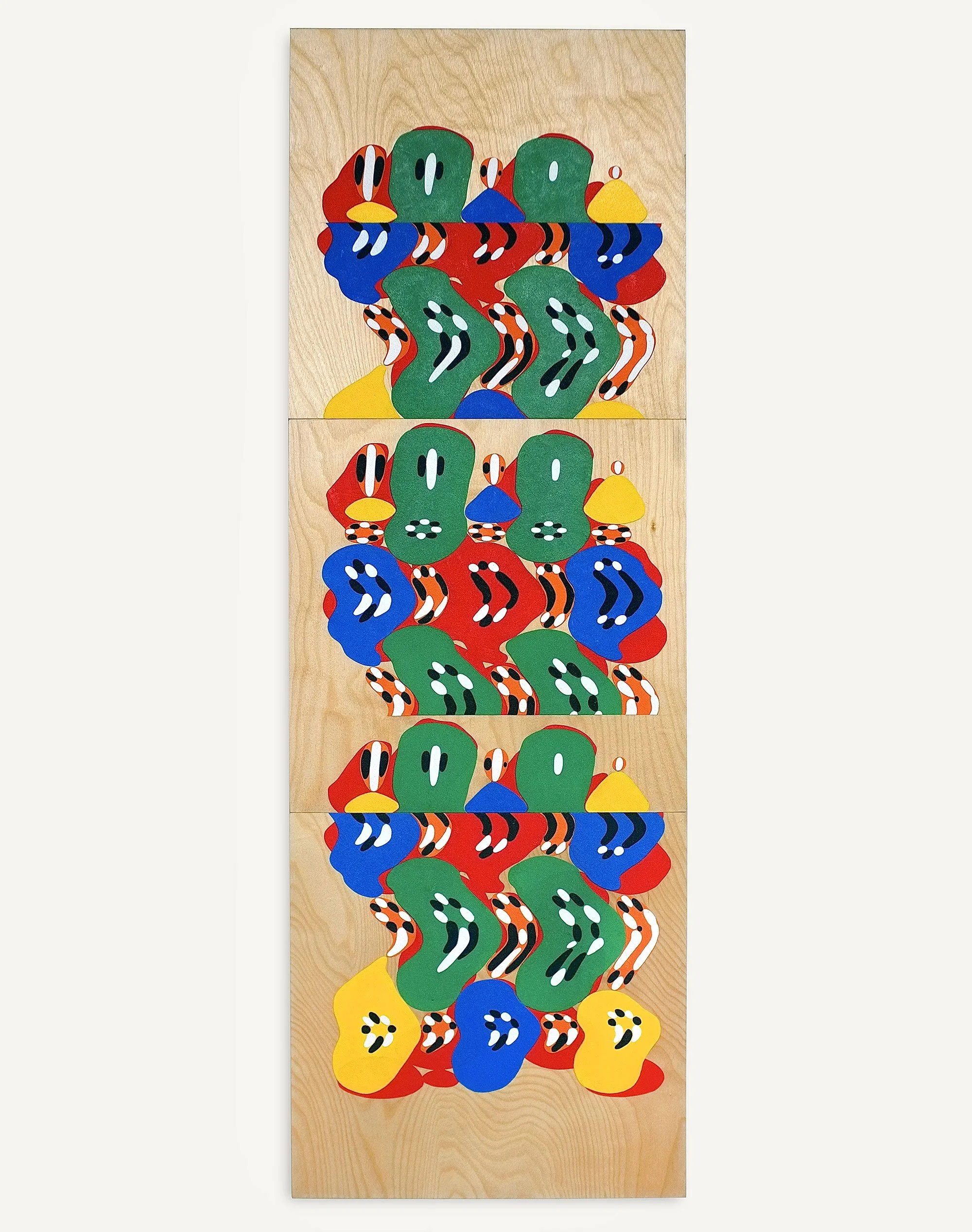
Sesame, 2025
You’ve talked about your work as “sequences, where each panel acts as a beat in a larger rhythm.” I think that’s a really poetic and interesting analogy because it captures the individualities of separate works but ties them back to a larger point of connection. Can you speak to that a little more? Are there underlying perspectives that you return to?
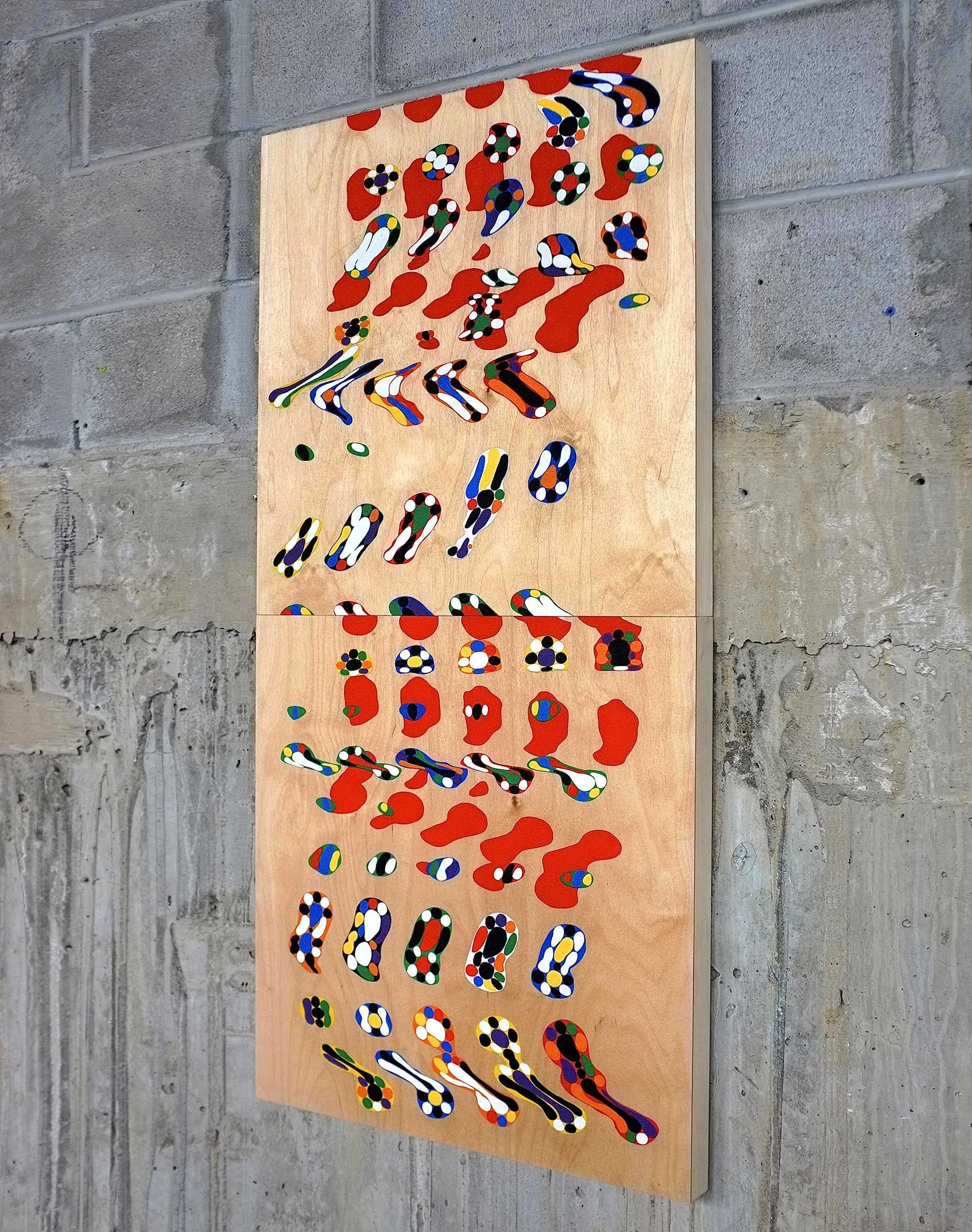
I did a series of paintings last year for a show which uses multiple wood panels that I screwed together. Part of what I’m doing with exploring rhythm/pattern is playing with how things repeat clearly and unclearly. The shapes I’m playing with are fluid and somewhat chaotic. Using these panels (“tiles”) grounded them a bit for me, creating “sequences”.
Having seen how you approach your work in the studio, I can recognize an ongoing openness that informs how you move within it, whether it be material, medium, or the visual approach itself. I think that can be a challenge for people sometimes, because it can be easier to rest in familiarity. How do you think about moving to new spaces with your work or experimenting?
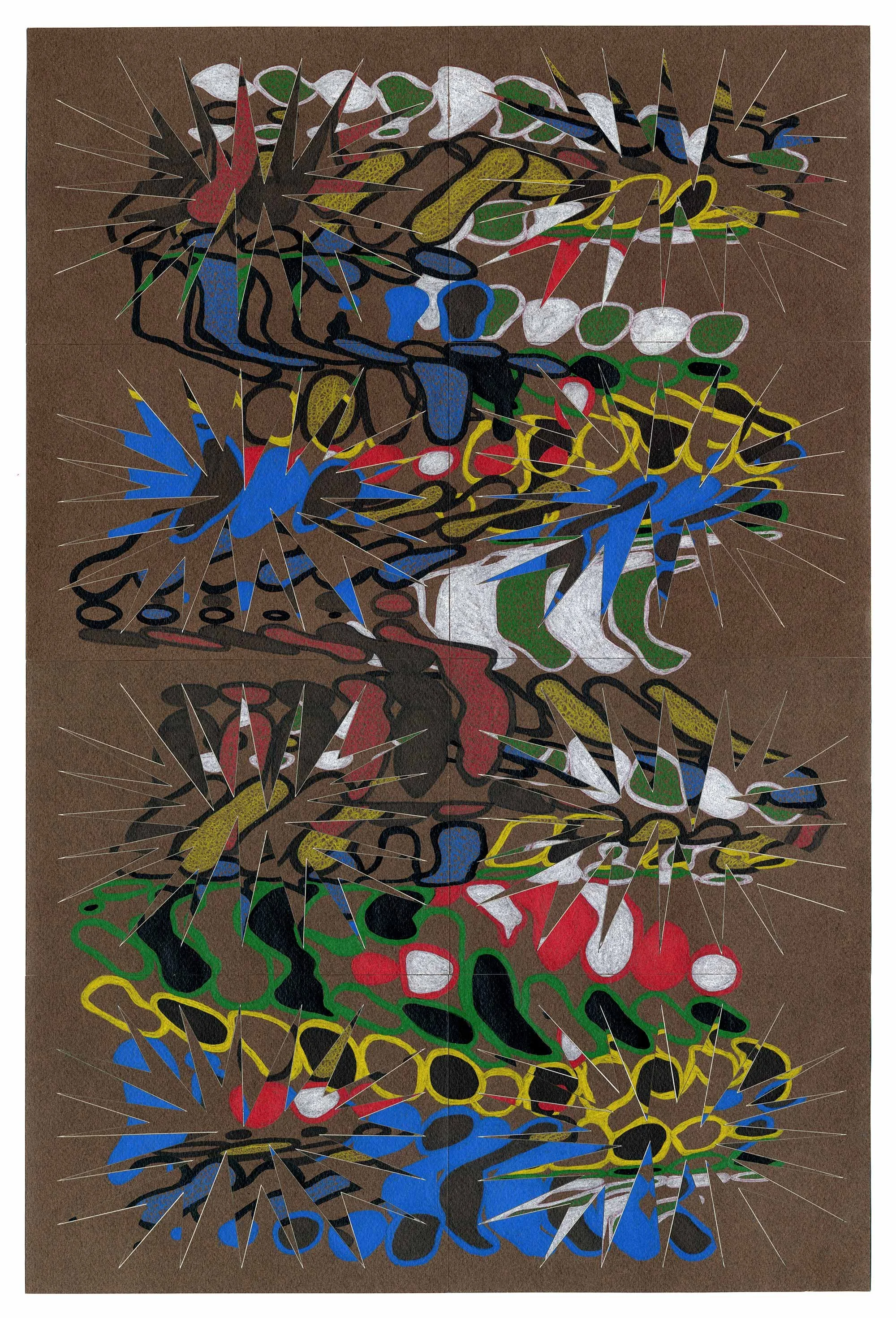
My process has always been a kind of reaction to either a material, tool, and/or motif I created. I’ll get my hands on something that attracts me and find ways to manipulate it. Something I do is to use leftover pieces from another project to make something else. It’s again something to react to. I’ll reuse scrap paper pieces from a collage or leftover pieces of cut tape to use for other artworks. I also enjoy using a variety of materials because of how they feel — things like drawing materials vs painting vs cutting paper.
Typically, after creating a batch of paintings, I’ll then move to drawing b/c I miss the feeling of drawing. The speed and physical movement is also different between mediums. I don’t do much sketching, but I tend to bring smaller paper pieces with me wherever I go. So, scale and mobility encourages using different materials/mediums as well.
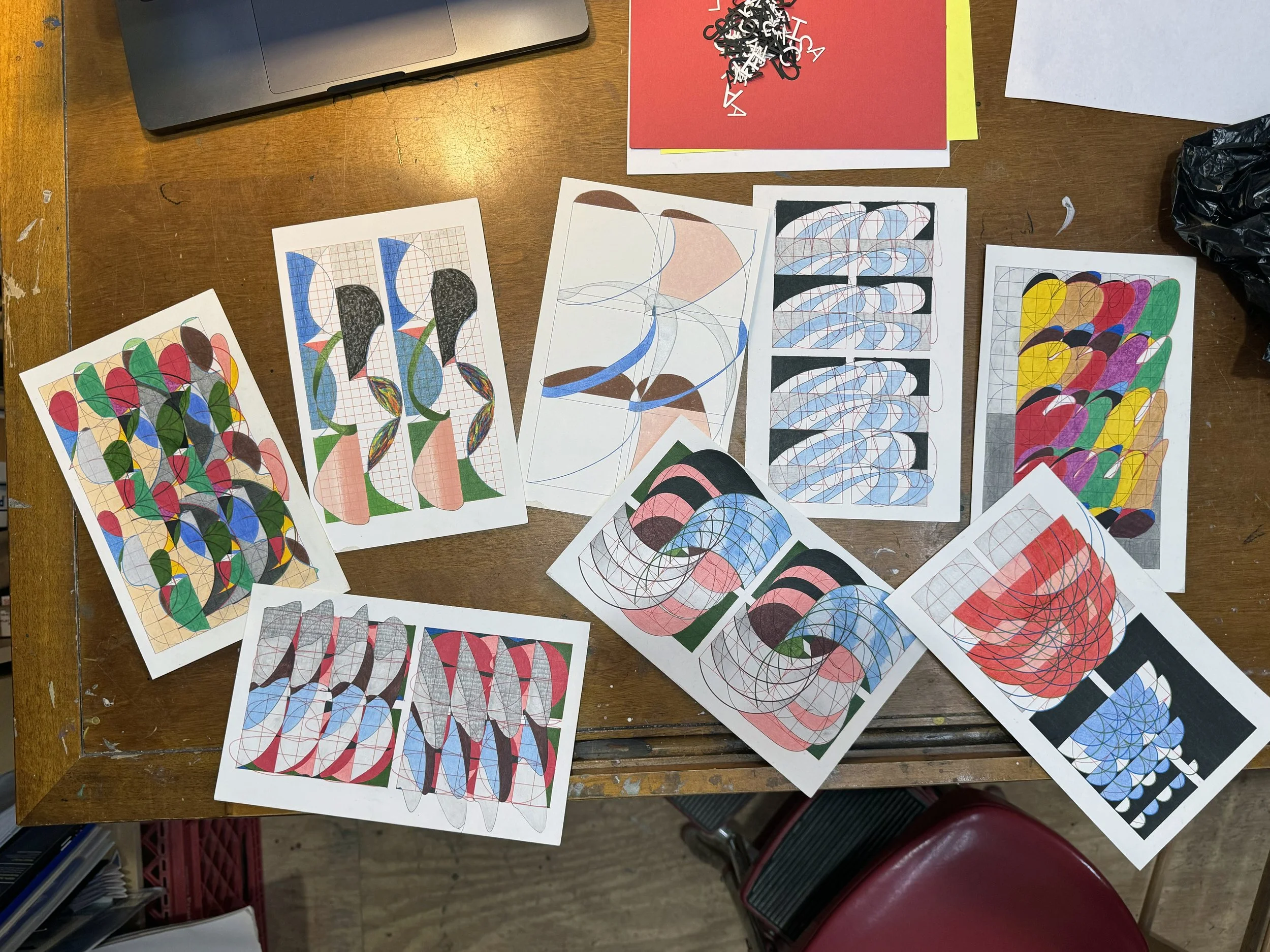
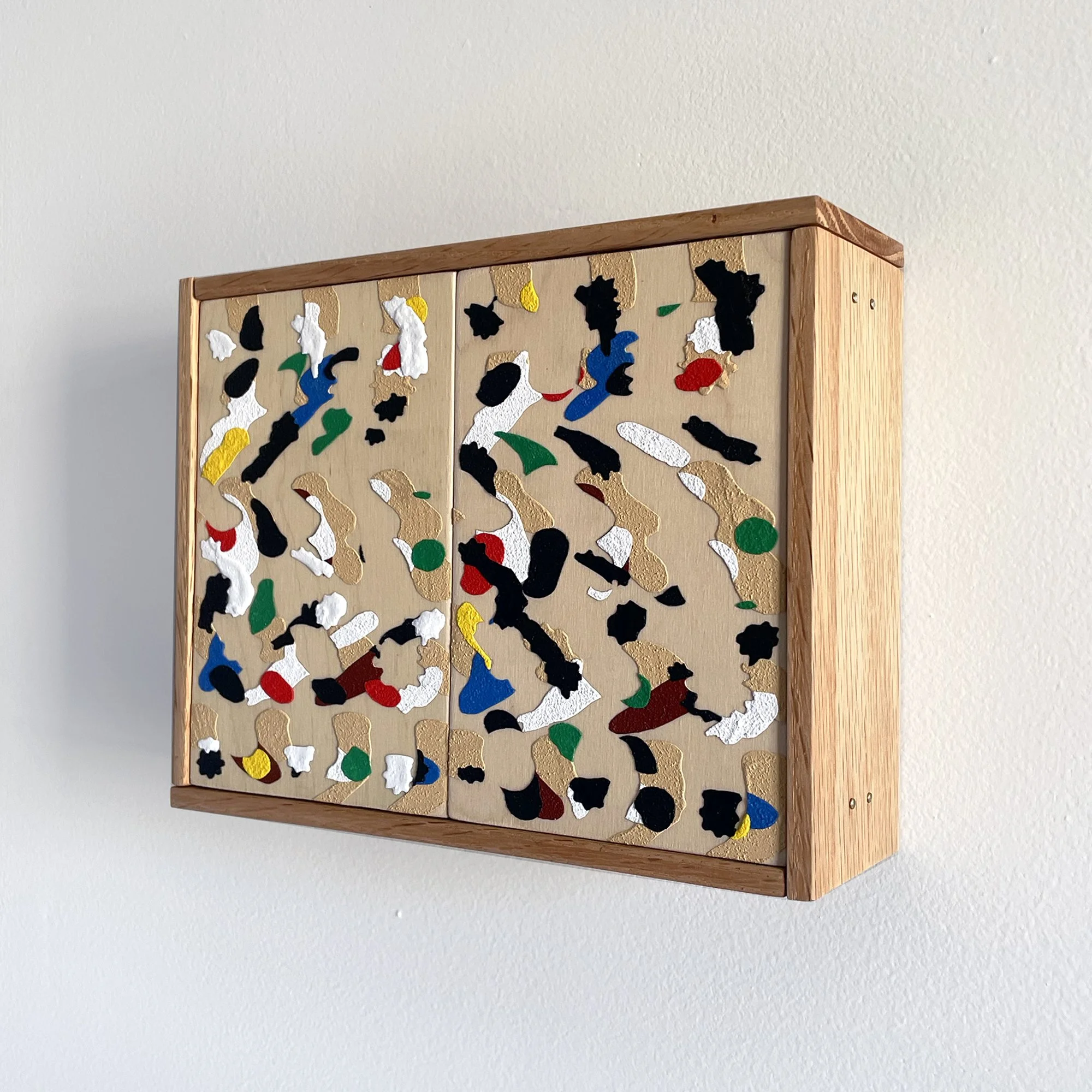
Untitled, 2025
Your work is graphic and abstract, but we can find a quiet and consistent natural quality to your work, whether it be the exposed wood grains or mixing sand with your paint, which is an interesting element. Does that natural quality hold space in how you approach your work?
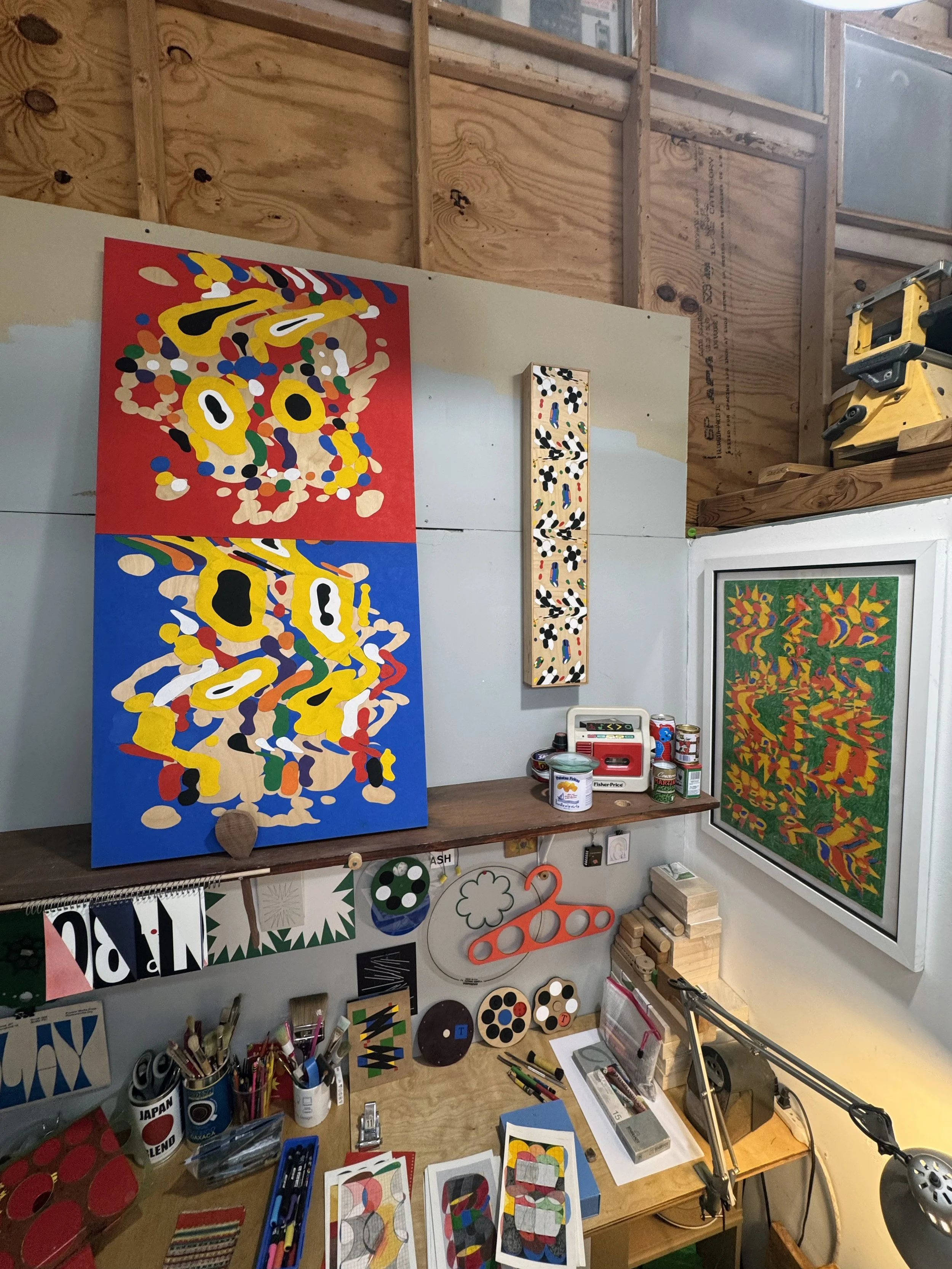
Yeah, I think it does. Coming from a digital design background, I’m very familiar with the computer. And I do use the computer as part of my process. I’ll go back and forth between drawing and “collaging” on the computer. At the end of the day, a lot of the heavy graphic work I do could be created purely digitally. But, a huge reason to make art for me is the physicality of it all. I enjoy tinkering with my hands most of all. And texture is an important element of a physical work. So yeah, wood grain, sand, chunky paint. Even the frames I add to my paintings add a lot to the pieces.
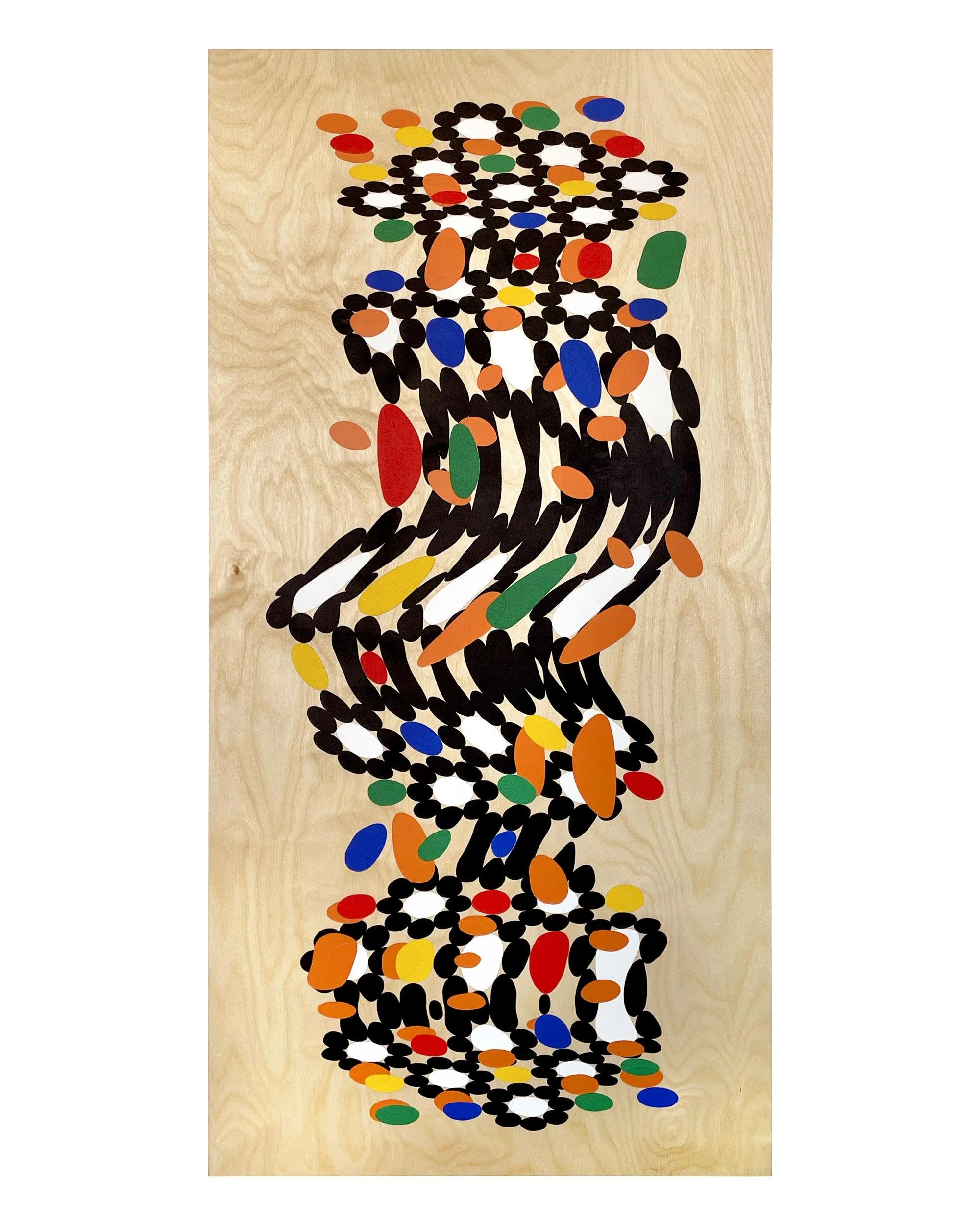
Untitled, 2024
There’s a balance in your work between precision and fluidity, where the quality of motion and movement is always very prominent to me. The forms flow into one another, but are handled in an intentional way. Does that balance or feeling of motion ever inform your work or how you think about it?
Yeah, the fluid nature of my work is something that keeps it interesting for me. Because I tend to get really precise with my execution (though, these days I am loosening up some), it’s a fun contrast that happens with the looseness of the overall composition. It’s like I’m trying to contain or capture a moment of stillness within the fluid nature of the shapes.
I also think of my paintings like structures. Most of them are motifs contained within the canvas. Like, they don’t bleed off the edges. I think some of these would be cool as 3D sculptures.
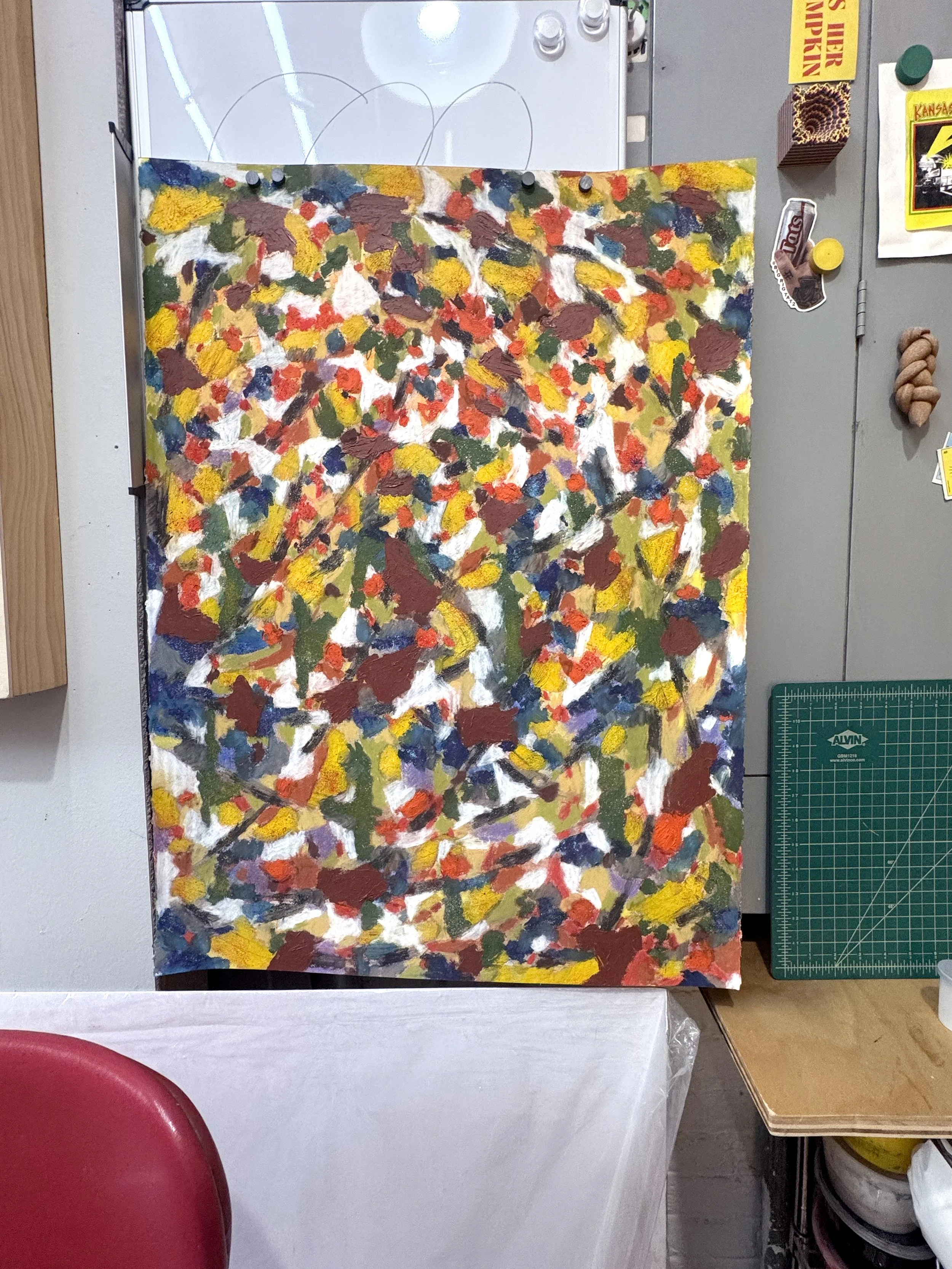
Untitled, 2026
Lately, I’ve seen you experimenting in the studio with some new visual approaches, particularly using pastel crayons, making very engulfed and expressive pieces and explorations. On their own, they're beautiful, and in conversation with your past work, but I can see a pivot, and am wondering if you could talk a little about the process, and what you may be exploring within it.
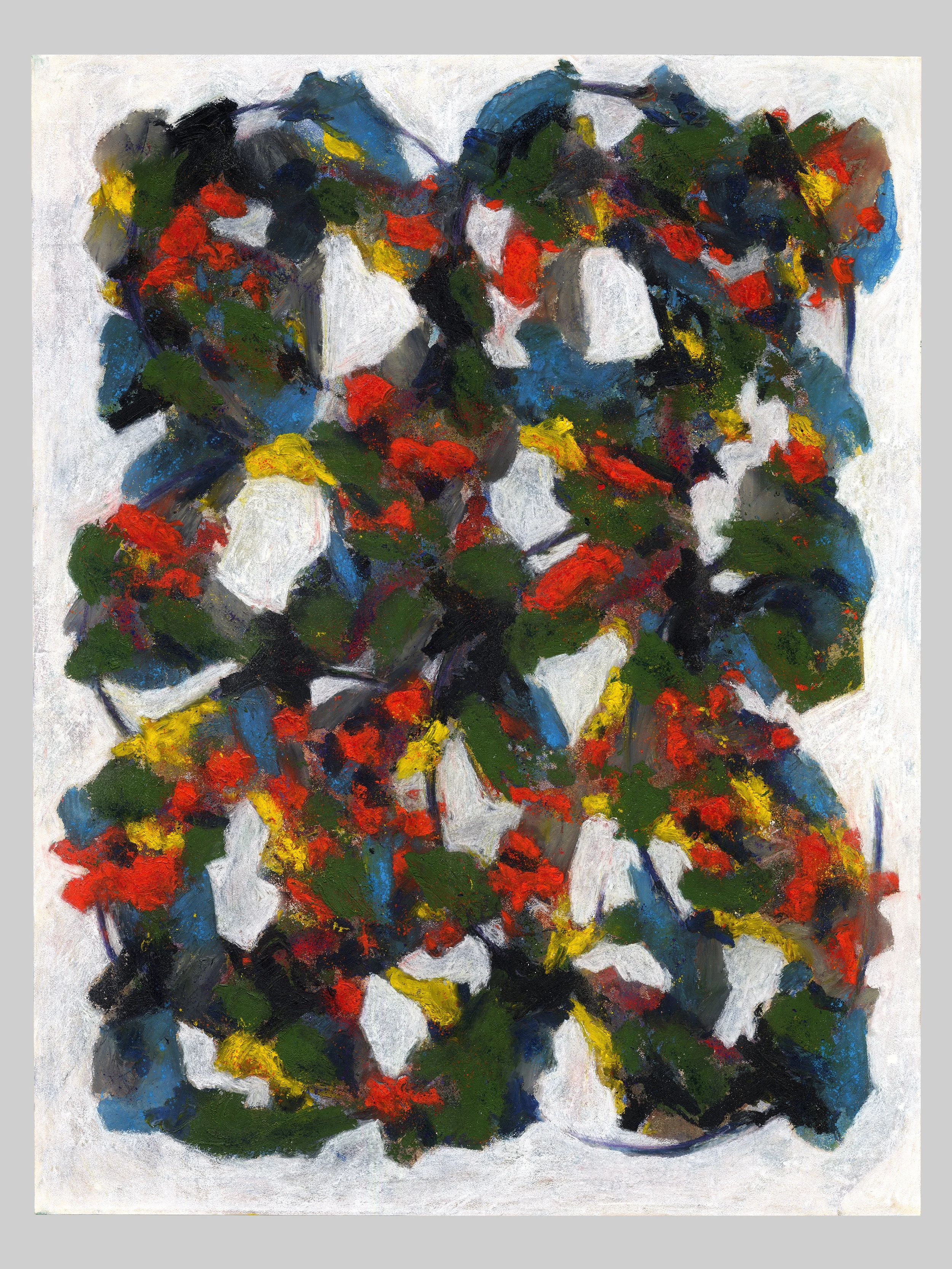
There was a period earlier this year where I was intentionally experimenting differently. It was winter, I was down and processing some big grief. I was interested in channeling those emotions and trying new things. Art as therapy. I had never done that before, both feeling this type of grief and incorporating art making into processing and releasing emotions. Things like creating faster, trying new mediums. Kind of improvising on the paper.
Recently, I’ve been back to small grid paper pieces, which incorporates what I was doing with the latest experimenting. I’m not sure what will be next, but here for it all.