
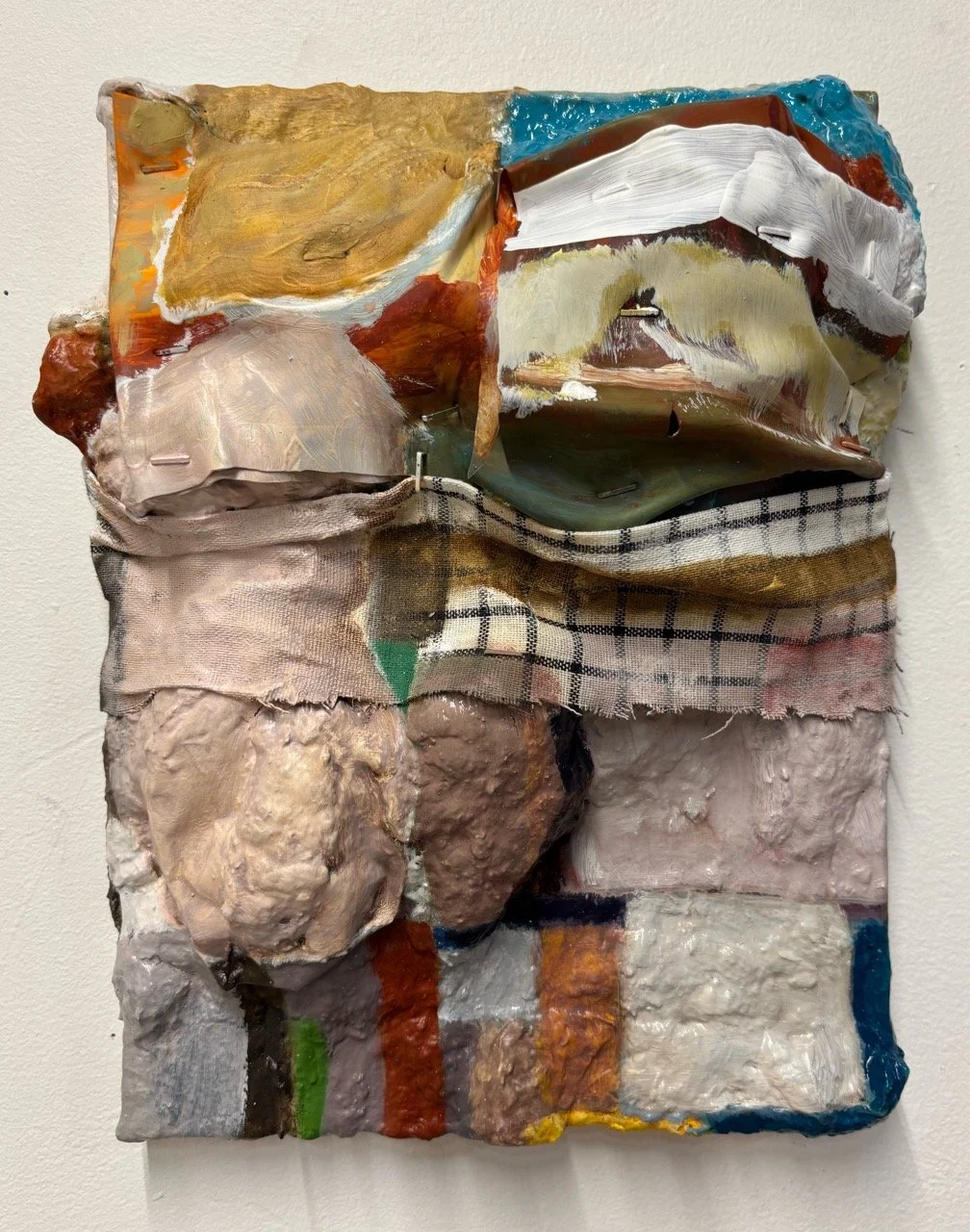
Home Bodies, 2025
MEMBER SPOTLIGHT
Victoria Carter
Victoria Carter is a visual artist whose work explores bold, sculptural abstraction, where color, texture, and material converge to create an assemblage of experience.
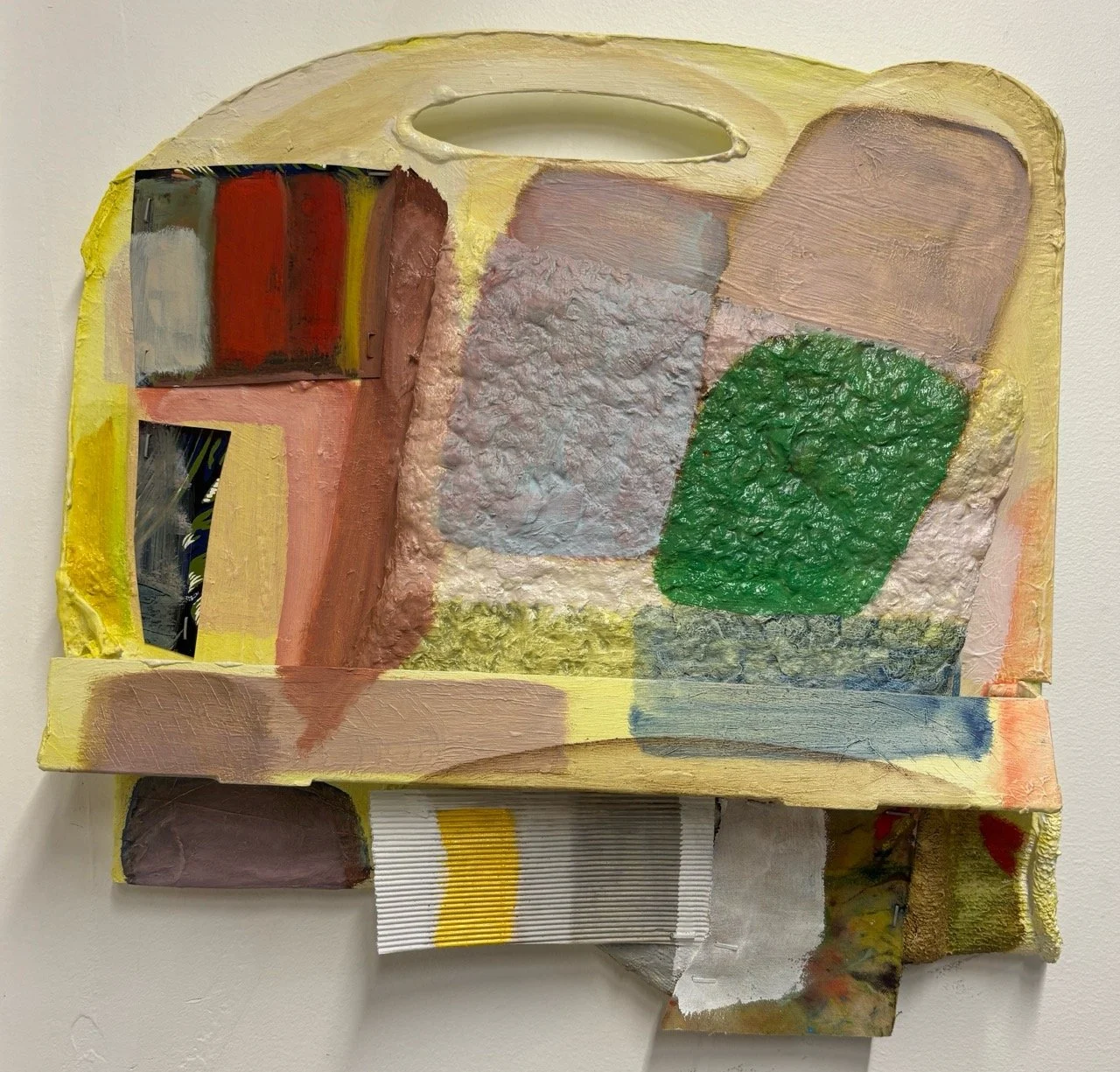
Come Play With Me, 2026
Your practice builds on an impressive background spanning the UK and the US. Can you tell us a little about yourself and your work?
I moved to NYC almost 10 years ago, and the city has profoundly influenced my practice. There's a reason so many people in NYC are artists and writers. Everyone has a side hustle, but it's the energy that generates - this restless creative buzz - that makes it such a freeing place to live. I'm not sure people in London were so accepting of that, at least when I lived there. NYC is mad and stressful at times, but you can be who you want to be.
You had initially trained in printmaking, which is still a focus in your work, but currently you are also working within a more sculptural assemblage approach. Could you share a little about that journey?
I studied printmaking during art foundation - a free, pre-college program in the UK meant to prepare students for art school. I spent most of the year in the printshop, and my entire final show was prints. I didn't start painting until about three years ago. Printmaking has two elements that carry over to my paintings: haptic feedback and loss of control. I enjoy the process of carving into a block of wood or lino. With the reduction technique (where you carve away from the same block and can't see the final image until the end), there's real symbiosis. When the final print comes off the press, there's magic, or there isn't - and that's exactly what I enjoy about painting. You can labor over it for five minutes or five years, but it either comes together or it doesn't.
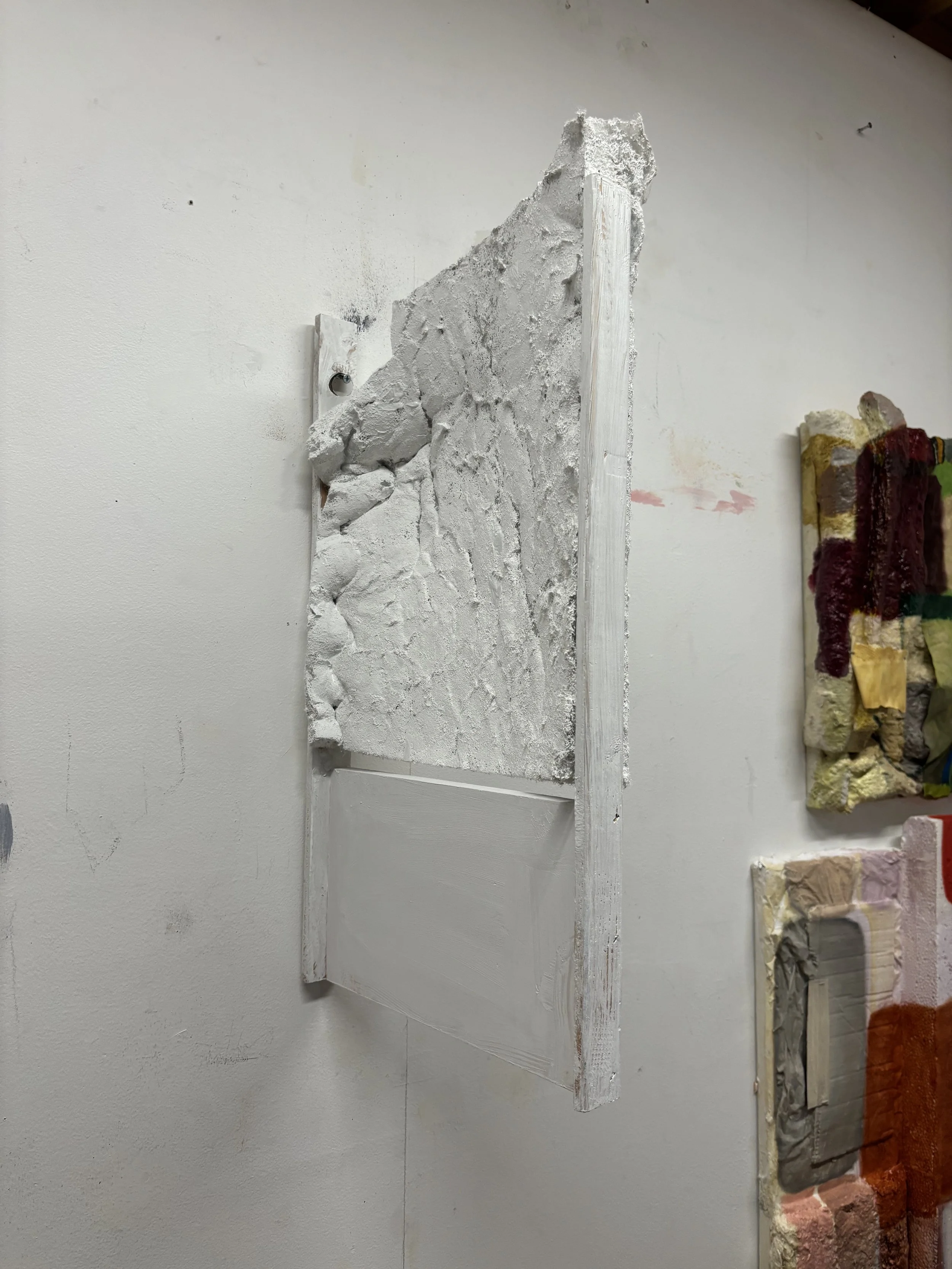
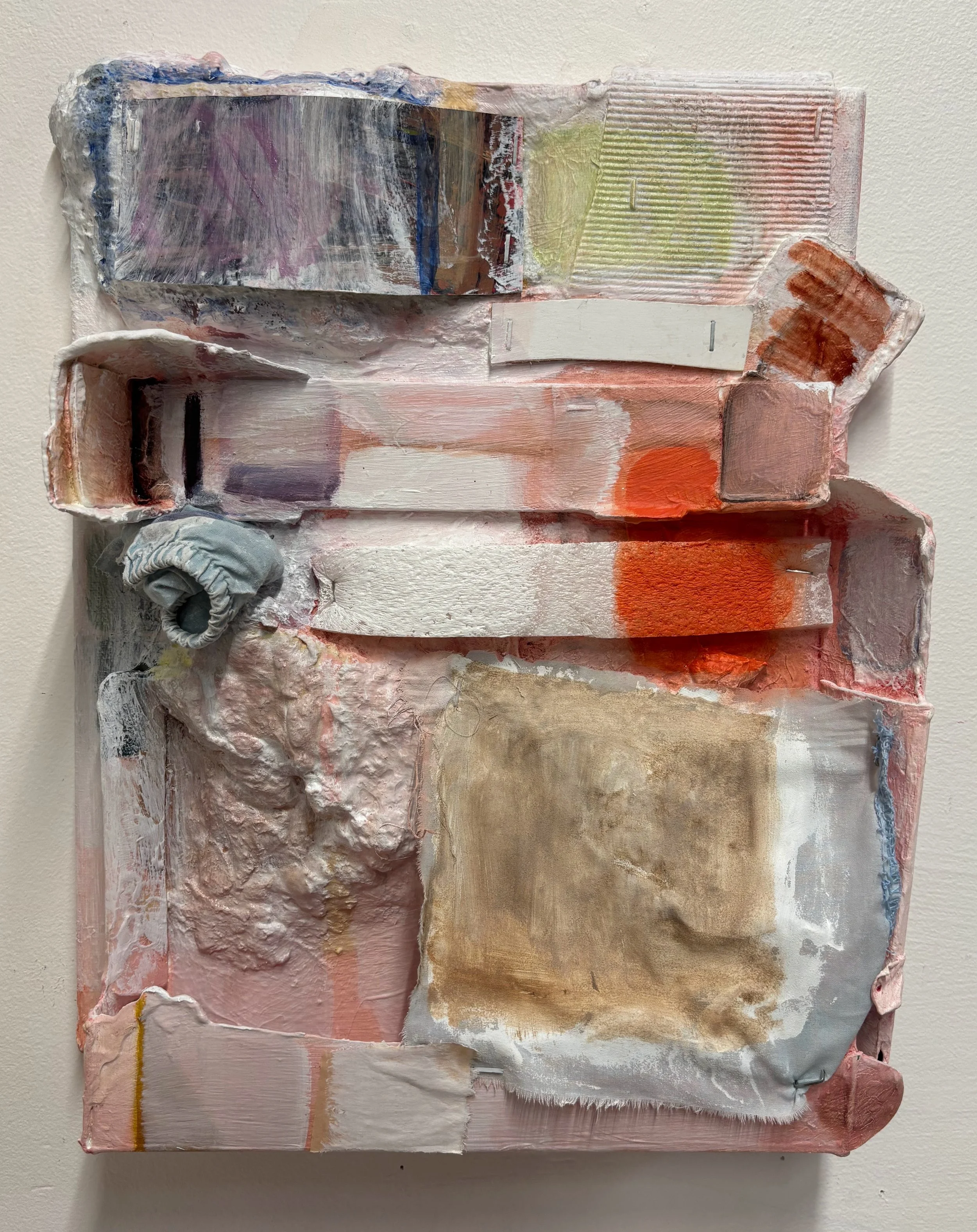
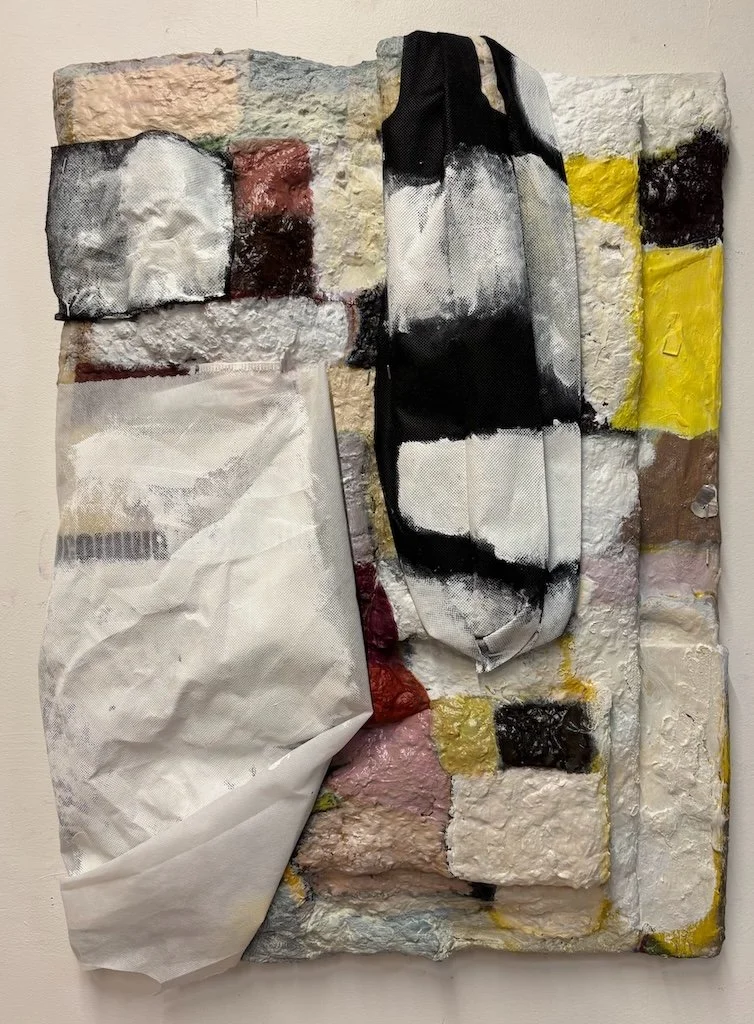
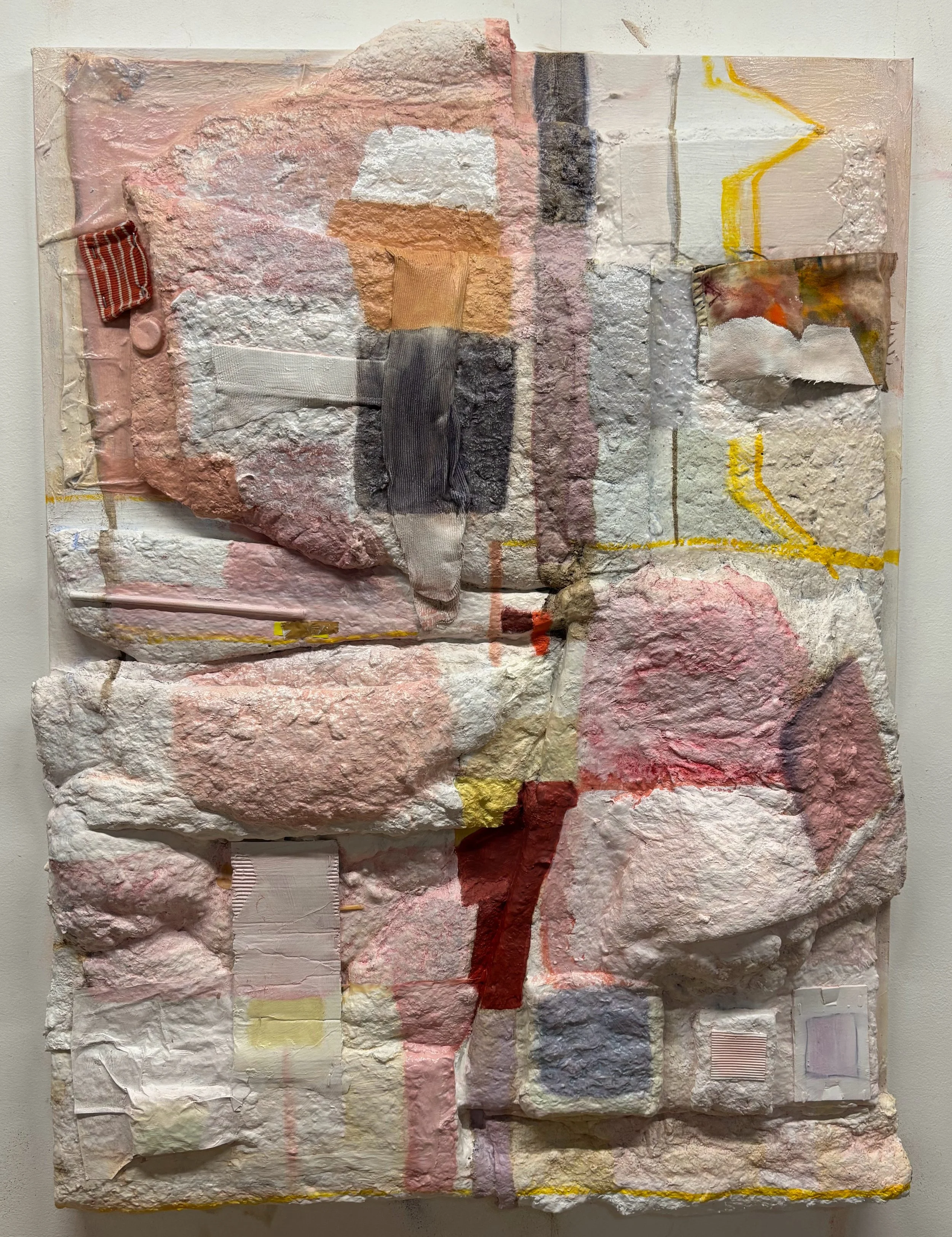
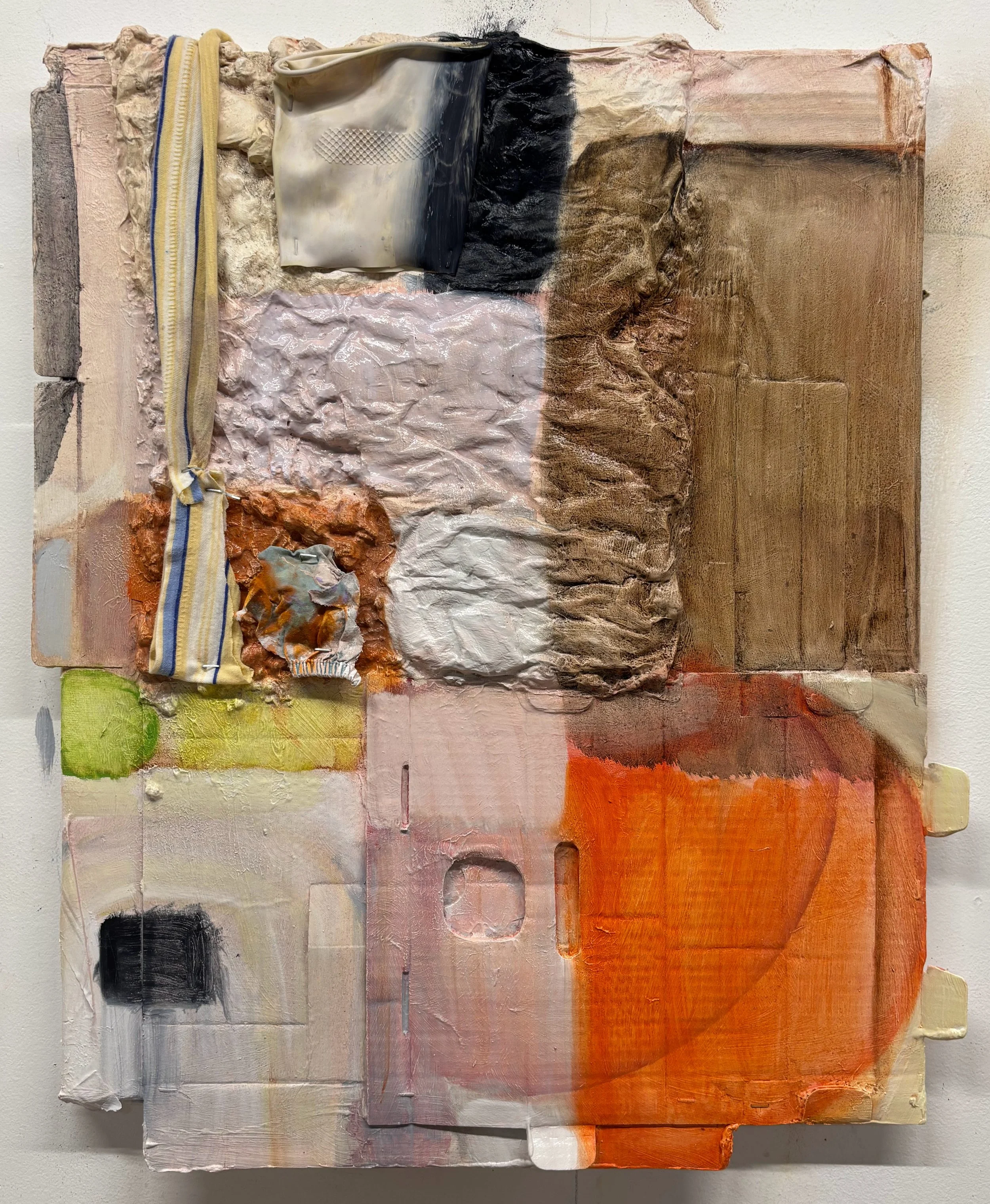
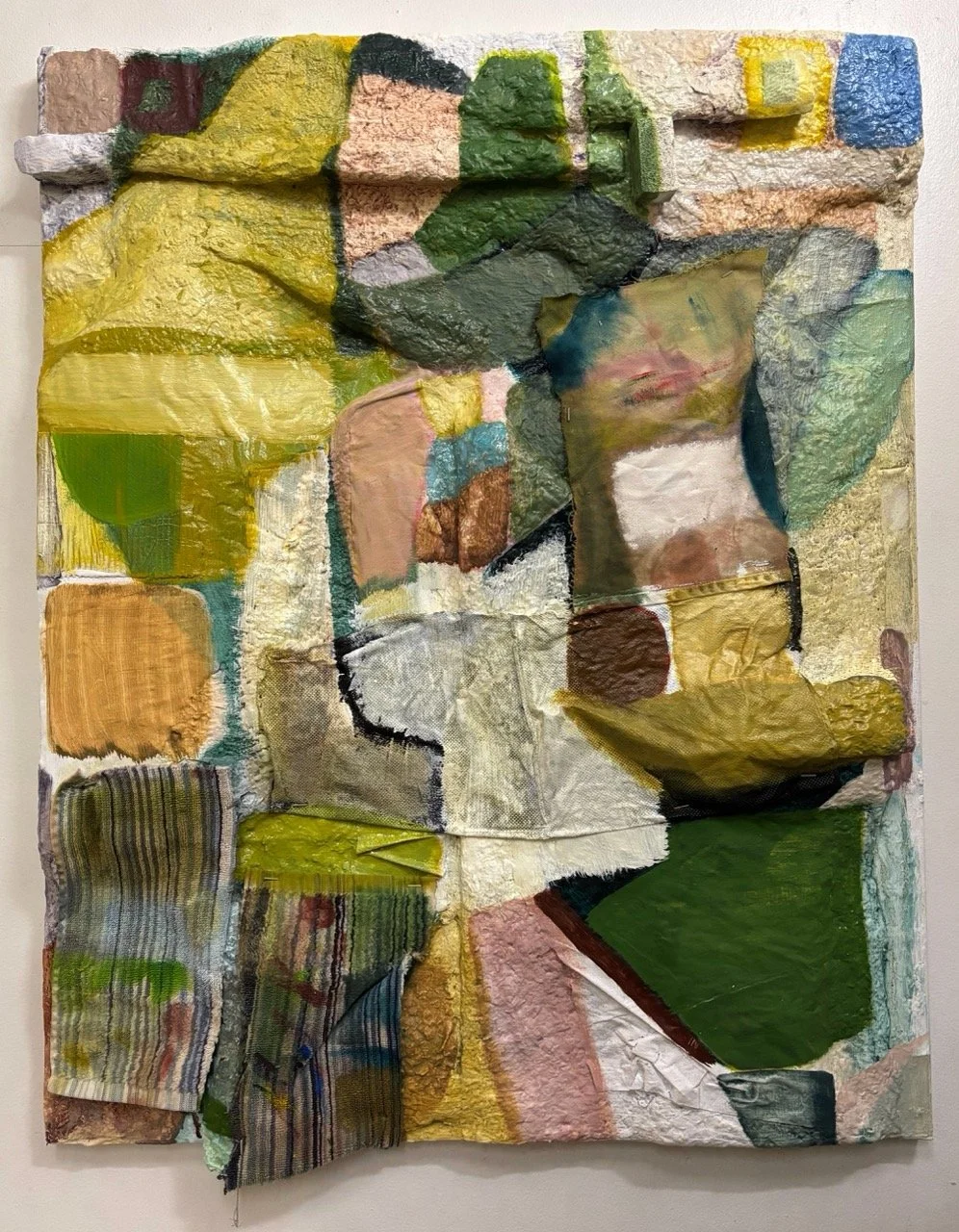
Selected works, and WIP
In addition to your art practice, you also hold a degree in English Literature. Do you find any overlap between the two?
My work isn't narrative-based, so I see my literature background as more of a parallel, tangential part of my creative life. I've always enjoyed reading. Choosing not to do a BFA means I'm largely untrained, so I have fewer preconceptions about what I should be doing. I think art school might have killed my confidence.
The sculpture assemblages have an inherent physicality to them that you balance beautifully with form, material, and color. How do you approach the material part of your work? Do those physical elements hold any specificity or feeling for you?
I really love the process of making, and the sculptural side of my work is a way to expand that. Why paint on a flat canvas when I can respond to an undulating one? Why make painting the only process?
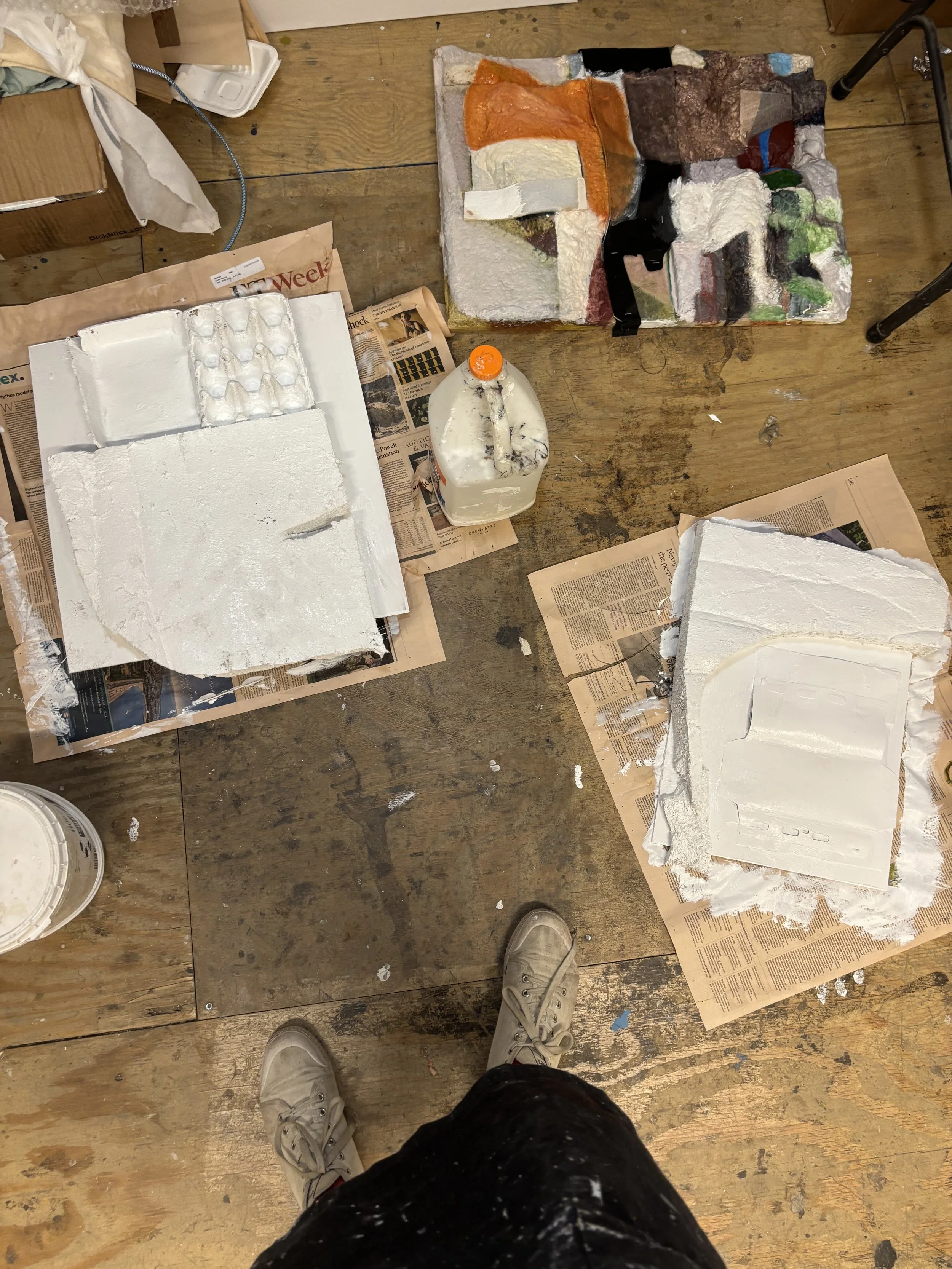
I'm not attached to the materials themselves, but they resonate with me because they're all discarded from my everyday life - household items like old washing-up gloves, socks, discoloured tea towels, kids' clothes - and things I find on the street. I'm interested in the accumulation of these objects, many of which are designed to be single or limited use, and how we almost drown in this stuff. I've also set myself a rule: nothing new, nothing bought specifically for the purpose. I use my kids' old clothes if they're discoloured or have holes, but if I can donate something, I do. Part of this comes from an environmental mindset, but part of it is to introduce fluidity and risk into the making. If I planned and bought everything in advance, it wouldn't interest me.
Looking at your work, I can see a conversation between contrasts — hard and soft, heavy and light, natural and man-made. Does that come into play for you when thinking about or approaching your work?
I love playing with binaries and subverting expectations. Those contrasts are definitely present, but I think I'm more drawn to a beautiful/grotesque dichotomy. I want to make formally proficient paintings that work spatially and chromatically, but that also highlight the ugly nature of our contemporary lives - how we produce things that will never degrade, ship them across the world, and use them once. I want to hold that discomfort in the work alongside its status as a painting.
Are there any familiar themes or focuses in your work that you return to?
I don't have themes as such, but I do see my work in relation to my surroundings. A lot of my recent paintings feel like paintings of the urban environment, filtered through my specific experience of living in Gowanus and being a mother to two small children. Through their eyes I see so much anew - the playgrounds, the clouds, the stones and sticks they pick up. All of that filters through the work.
What are you working on these days? Are there any things you are looking to do or explore in your practice?
At the beginning of the year, I set myself a challenge: don't buy any new supports. It came from seeing so much discarded material in our studio dumpsters and on the streets. Anything can be a painting, so why not use what's around? It's also a formal challenge, responding to an unplanned scale, material, or non-rectilinear shape. I cheat, if that's the right word, by repainting old canvases, but as the year goes on, those are running out, so I've been piecing together wood, metal, polystyrene, and cardboard. Starting without a clear rectangle has been freeing, and I'm excited to see how far it might go.